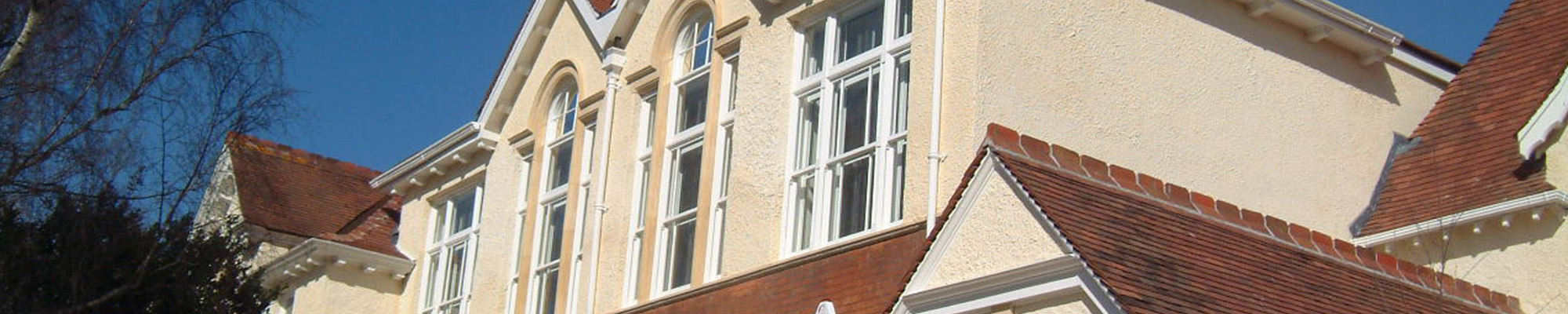
Lime Render
Originally lime based, renders kept the cob and timber dry underneath also allowing the walls to breathe. Recently it has become more common to use impervious cement rich renders. Unlike traditional materials underneath, these renders are non porous and are not flexible. This results in cracking in the render and allows water to penetrate through. Decay will occur as the stone, timber, cob and brickwork to remain damp. To avoid this do not apply cement rich render to old walls.
Lime Plaster
Pre 1919 houses were often plastered with lime, a traditional finish, until plasterboard and gypsum took over. As with lime renders, lime allows brick, stone and ancient wattle and daub walls to breathe. It may be worth replacing re plastered or damp walls with lime if you have an old house.
An experienced lime plasterer who has experience and specialist knowledge of lime plastering should be employed. Two or three coats should be applied depending on how flat you want the surface finish. If the ceiling needs lime plastering too, using a reed mat instead of riven laths will save you thousands if you are on a tight budget. Using laths and screws, fix it to the bottom of the joists. For the first coat, the mix should be one part putty to three parts sharp, well – graded sand mixed with lots of animal hair.
Bags of haired plaster should not be left sitting around for more than four weeks, as the alkalinity of the lime will cause the hair to rot. Apply a setting coat of one part lime to two parts fine sand for a smooth finish. |